
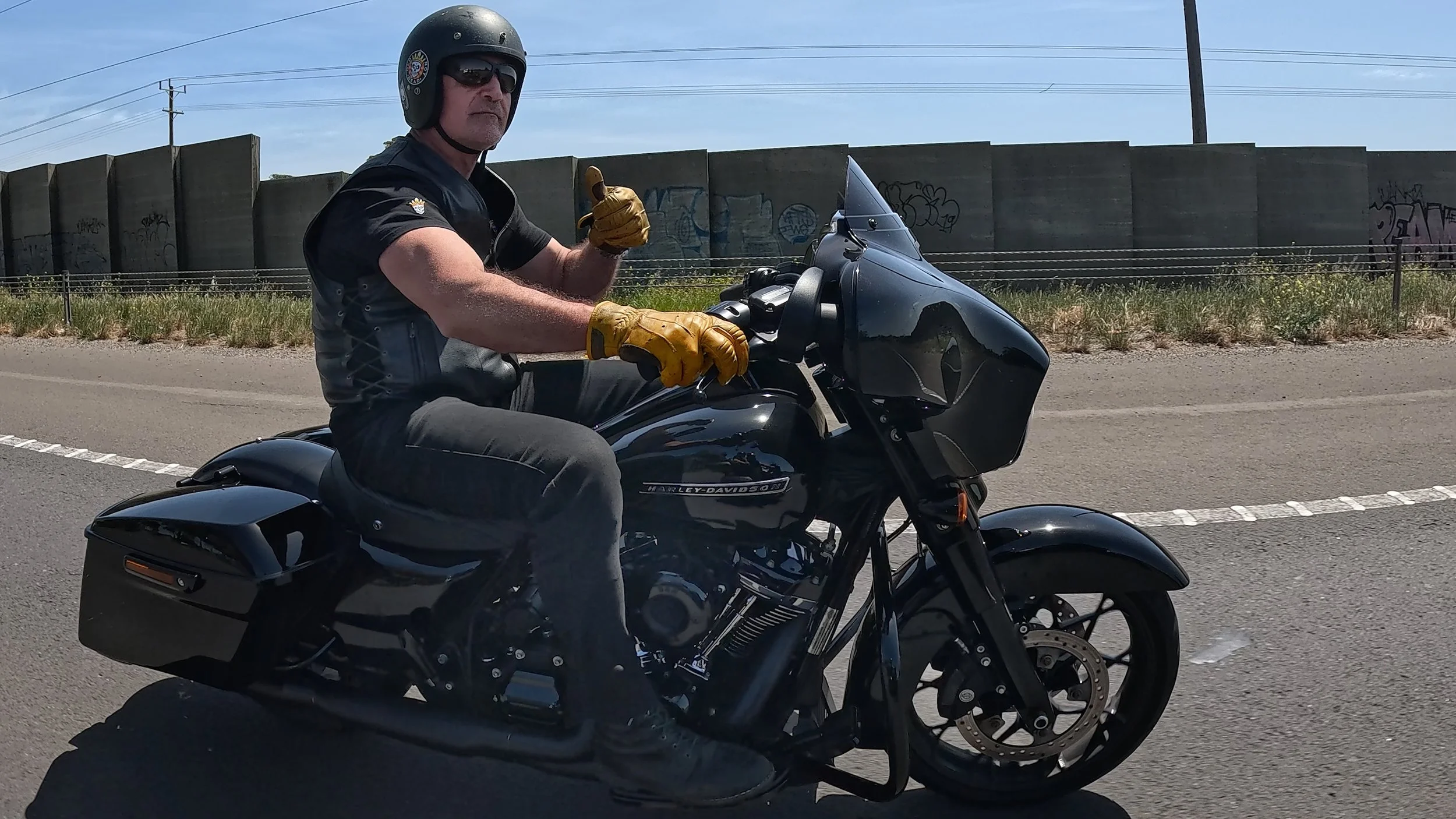
The first time I saw a Street Glide it was doing something illegal. It was threading between two lanes of moving traffic on a freeway. Black paint with chrome, crusty bearded biker and a batwing fairing slicing past all the car mirrors.
I remember thinking that was a cool looking motorcycle. I was a dedicated Harley Davidson Fat Boy rider. I didn’t know what a batwing fairing was - other than it was a crutch for old men.
Years later I bought my first Street Glide in 2016. Today I ride a 2020 Street Glide Special with the 114 engine and an S&S 475 cam in it. This is my honest read on the model, what it does well, where it annoys me, and why I keep coming back to it as the sensible default touring Harley.
Why the Street Glide Became the Default Touring Harley
The Street Glide sits in the middle of Harley's touring range and does the most jobs adequately. It has a fairing, so that long highway days don’t beat you up.
It has hard saddlebags, so you can actually carry things. It has a big engine and a big tank and a comfortable seating position for two people. It is not the most radical touring bike Harley makes and it is not the cheapest, but it is the one that covers the most ground with the fewest compromises.
That is what makes it a default. If you want a Harley that will do a weekend away on some twisty roads, a daily commute and a lap of the country without needing to be a specialist machine, the Street Glide answers all three.
The Road King does the same job with less weather protection. The Road Glide does it with a bigger, uglier, arguably better fairing. The Street Glide just sits in the middle and gets on with it.
The Batwing Fairing and Where It Came From
The batwing is the Street Glide's whole personality. It is a fork-mounted fairing, meaning it turns with the handlebars rather than staying fixed to the frame. That gives it a heavier feel at low speed and a more connected feel in your hands, at the cost of a bit more wind pressure on the bars at highway speed compared with a frame-mounted design.
The shape itself is a piece of Harley history that dates back decades, and the Street Glide took that look and stripped it back into what Harley called a low-profile, stripped-down tourer.
The fairing on my 2020 does a genuinely good job of pushing wind off your chest and helmet. I have done long days on it that would have wrecked me on a naked bike, and the fairing is the reason. It reduces wind fatigue more than any accessory I have bolted on.
Evolution of the Harley-Davidson Street Glide
The Street Glide showed up in 2006 as a fresh take on the touring line. Harley took the comfort and power of the full-dress bagger and gave it a slimmer, cleaner look — the batwing fairing, the stripped-down rear, the attitude the touring bikes had been missing. It read as a bike aimed at a younger rider who wanted the long-haul ability without the old-man baggage.
The lineage runs straight back to the Electra Glide. That's been the company's touring platform for decades, and the Street Glide is its sharpened version — same bones, less chrome, more presence. Where the Electra Glide stacked on the tour pack and the windshield and the full fairing, the Street Glide cut all that back and let the batwing do the work.
Since 2006 the bike's been refined every few years, and each generation has chased the same three things: more performance, more comfort, and a better overall ride. The engine moved through the eras — from the Twin Cam 96 and 103, into the Milwaukee-Eight 107 and 114, and now the 117 in the latest bikes.
The tech came along too, from basic gauges to the Boom! Box infotainment system and now the large touchscreen on the current models.
What hasn't changed is the point of the thing. It's still a touring motorcycle that lets you cover real distance in comfort while looking like you actually wanted to be on it — not like you're driving a two-wheeled lounge chair.
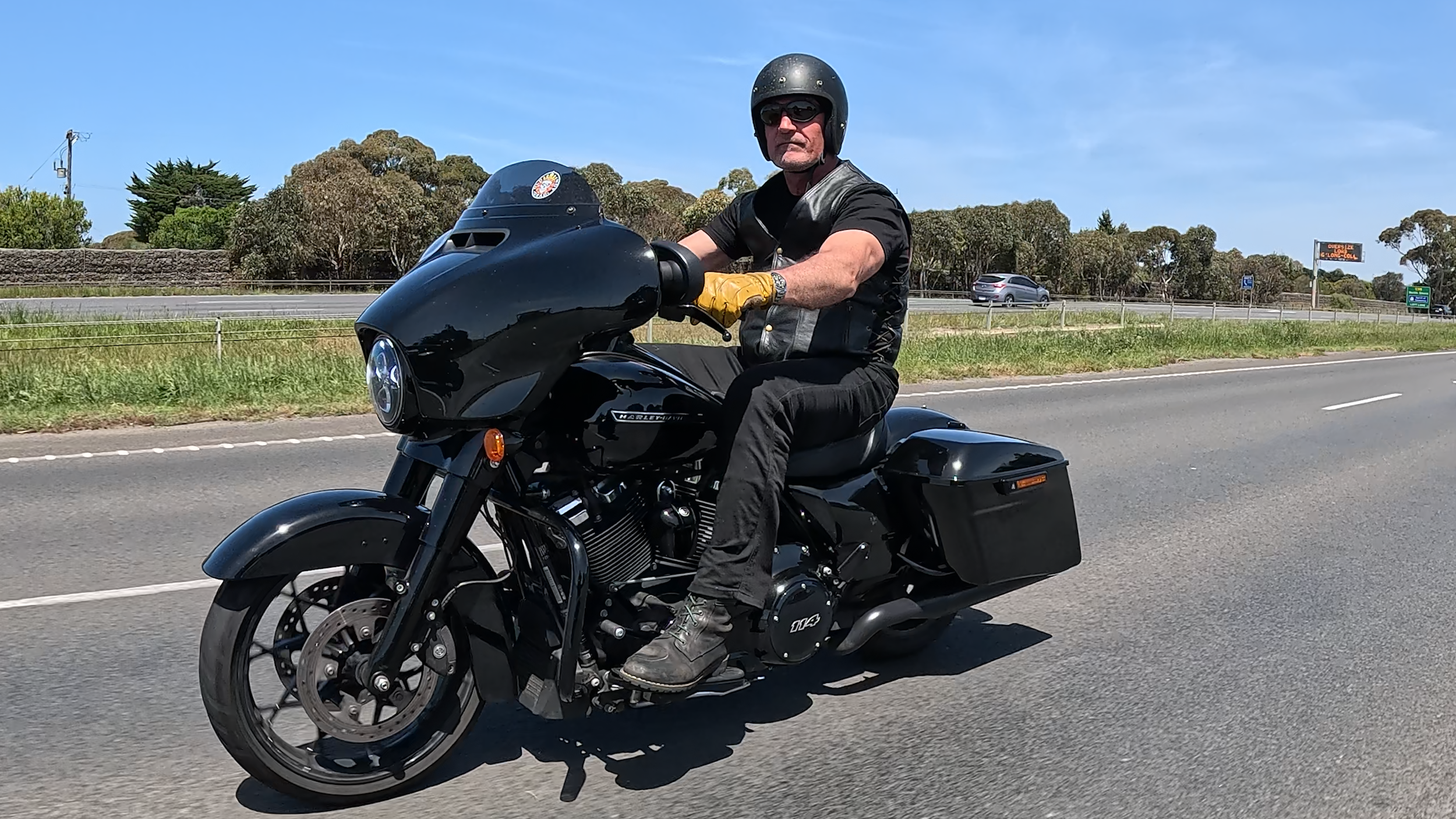
Street Glide Model History and Trims
The Street Glide family has grown into several distinct models. Not all of them available new as the model designations change from year to year. The core idea is the same but the specs change.
Street Glide: The standard batwing tourer. We don’t have this in Australia
Street Glide Special: The higher-spec, blacked-out version. Same platform, upgraded finishes and equipment; the 114 version is a common used buy
Street Glide ST: The performance-flavoured model. Milwaukee-Eight 117 with West Coast styling and dark-and-bronze finishes. Here is an article and video that compares my Street Glide with a Street Glide ST
Street Glide Limited: The full-dress touring version. Like an “Ultra” used to be. Milwaukee-Eight VVT 117, 10-spoke wheels, upgraded audio, Grand Tour-Pak, heated rider and passenger seat.
CVO Street Glide: The factory custom flagship. Top of the range in finish and equipment; check current Harley-Davidson Australia listings for exact specification. Way too expensive in my opinion. For the cash difference between a Street Glide Special and a CVO you could build an awesome performance bike far better than the factory CVO.
The Special is the one Australian buyers mostly end up looking at second hand. A Street Glide Special with the 114 engine is a common listing, and published price guides for the model have sat around the $18,000 to $40,000 mark depending on year, kilometres and condition.
Treat that as a starting point only, because private seller pricing moves around a lot and you should verify anything current with a dealer or a live listing.
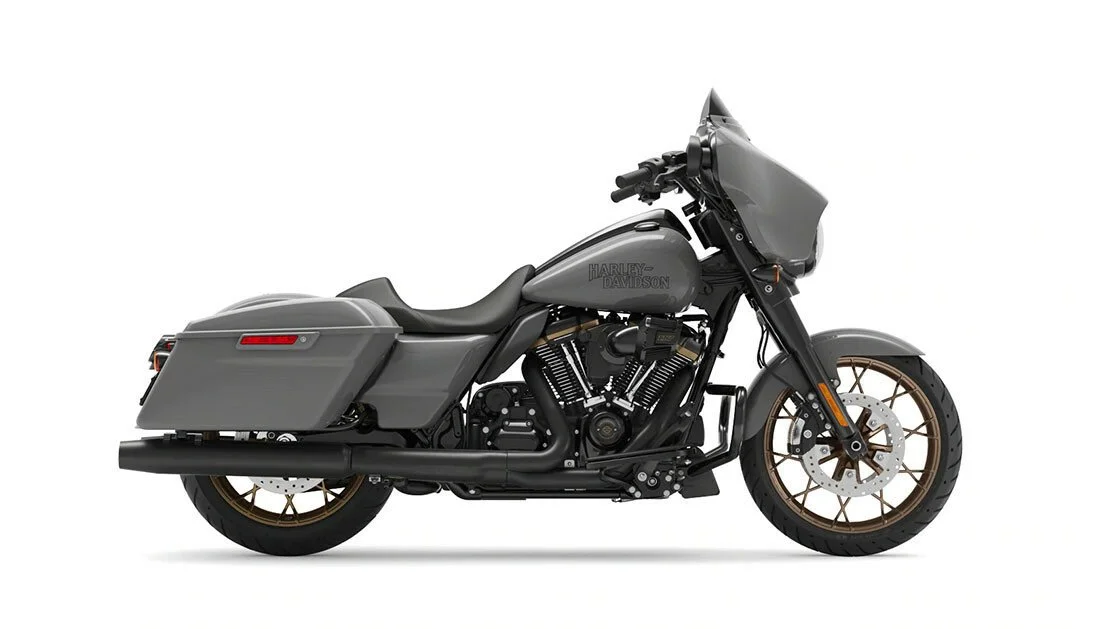
Harley Davidson Street Glide ST
Engine Eras: Twin Cam to Milwaukee-Eight 107, 114 and 117
Broadly, the Street Glide has moved through two engine families. Earlier bikes ran the Twin Cam, a pushrod V-twin that a lot of riders still defend loudly. Then came the Milwaukee-Eight, which is the engine in everything current.
Milwaukee-Eight 107: the entry point into the modern Street Glide, smoother and more refined than the Twin Cam it replaced.
Milwaukee-Eight 114: the engine in my 2020 Special. The torque is the story here. It pulls from low down and does not run out of puff when you load it with a pillion and luggage.
Milwaukee-Eight 117: the current standard fitment, rated at 107 HP and 175 Nm in the Street Glide.
I fitted an S&S 475 cam to my 114 and it changed the character of the bike. It gave it a stronger midrange punch and a sound that finally matched the look.
The 114 already had enough torque to make it easy to live with, but the cam made it feel much sharper. My opinion is that all Harley Davidsons need a few essential mods to make them excellent bikes.
Street Glide vs Road Glide vs Road King
This is the question everyone asks, and the answer is simpler than the internet makes it sound. All three share the same touring platform. The real difference is the fairing.
Street Glide: Batwing, fork-mounted fairing that turns with the bars, heavier feel at low speed because the weight of the fairing is on the bars but i much prefer this. This is a classic Harley Davidson look.
Road Glide: Shark-nose, frame-mounted fairing. Very stable in crosswinds and at highway speed. For me this is much more awkward to ride at slow speed as the bike feels much longer.
Road King: No fairing just a removable windscreen. Stripped back, easier to work on, more wind and weather on your body, the traditionalist's choice.
If you do big kilometres on open roads, the Road Glide's frame-mounted fairing has a small advantage. If you mostly ride around town and do the occasional trip, the batwing is easier to live with and, in my opinion, better looking.
The Road King is for people who want the touring chassis without the plastic. There is no wrong answer, only different priorities.
Be aware if you are tall like me - both fairings allow a similar amount of air over the top which doesn’t bother me. Both the Street Glide and Road Glide have buffeting from the wind. It’s a motorcycle not a car and either fairing will take the edge off a high speed long distance ride.
Living With a Street Glide Special in Australia
I am 6'4", which means a stock Street Glide is not automatically comfortable for me. The seat and the foot controls were the two things I changed first, and the difference was immediate. My knees stopped complaining and my hips stopped cramping on longer days. If you are tall, budget for that before you buy anything cosmetic.
The saddlebags are one of those features you do not appreciate until you have them. Wet weather gear, a laptop, groceries, a jacket liner, all of it disappears into the hard bags and stays dry. It is the least glamorous reason to own a touring Harley and one of the best. It’s very hard to go back.
The other side of ownership is the electrical side. I have had a few gremlins and problems (nothing serious). Older bikes and previous owners' wiring work are the usual suspects if you are buying second hand. Check the battery, check anything aftermarket, and keep a proper service record. These are not cheap bikes, don’t be lazy on maintenance.
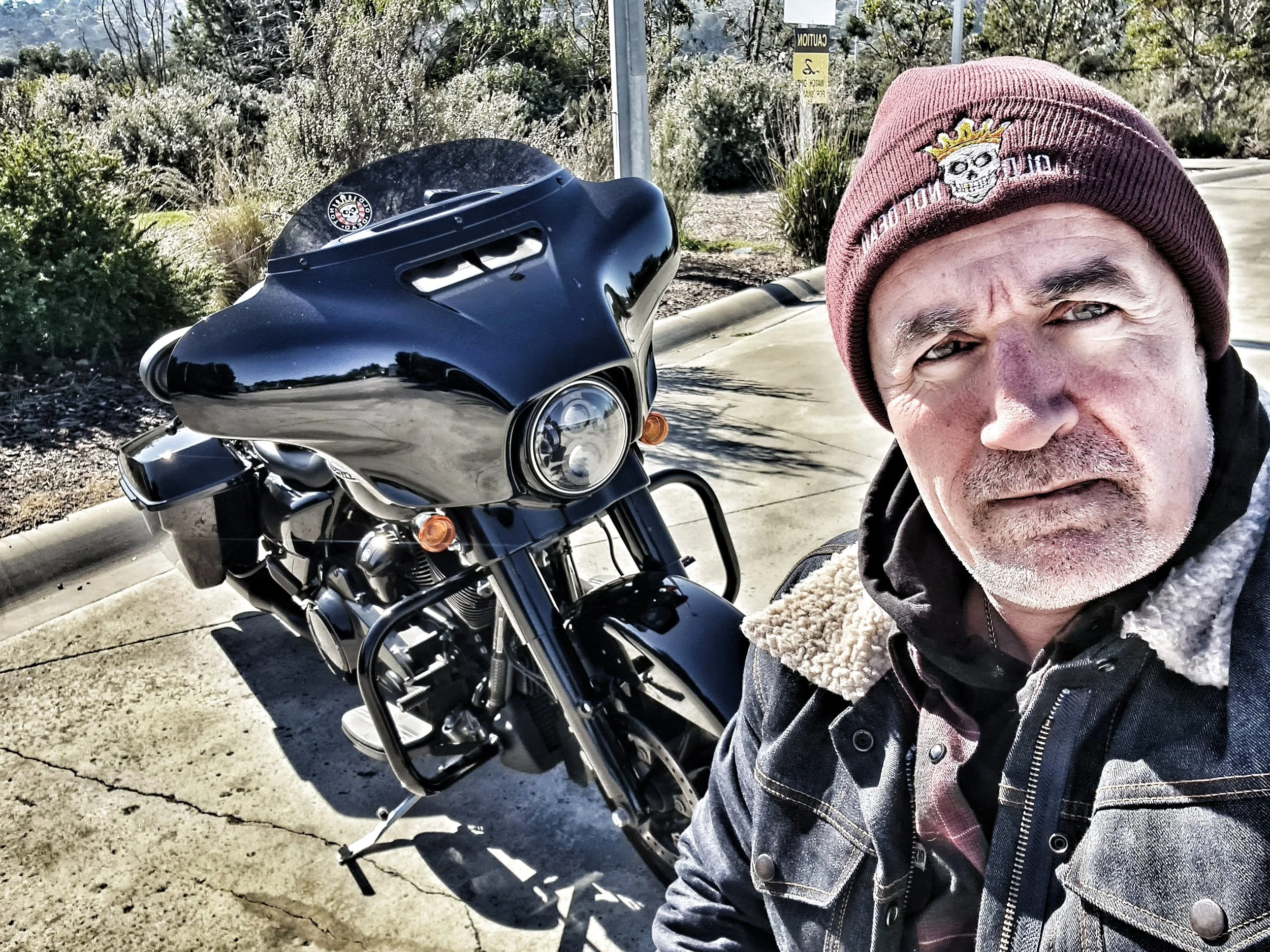
2020 Harley Davidson Street Glide Special
What Changed on the Newer Street Glide
The current generation got a proper update rather than a sticker kit. You now get the 117 engine, Brembo brakes, revised / better suspension, a new touchscreen, a larger glovebox (fantastic addition) and an arguably better fairing. The riding modes (Sport, Road, Rain and Custom) genuinely change how the bike behaves, particularly in the wet, which makes a difference.
The one thing Harley still has not solved is the war with the EPA to get a good exhaust note. The current Street Glide still needs an aftermarket exhaust if you want the sound a Harley should make. That is a running cost to factor in, not a surprise after you sign.
Frequently Asked Questions
Is the Street Glide a good first Harley?
It can be, as long as you respect the weight. The engine is smooth and the torque is friendly, but a Street Glide is a heavy touring bike at low speed. If you are new to big bikes, spend time on car parks and quiet streets before you take it into traffic.
What is the difference between a Street Glide and a Street Glide Special?
The Special is the higher-specification version of the same bike, with upgraded finishes and equipment. Underneath they share the touring platform and engine family. Second hand, the Special is the model most buyers search for, which affects availability and price. Australia never recieved the standard Street Glide - only the “special”.
Is a Road Glide better than a Street Glide for touring?
The Road Glide's frame-mounted shark-nose fairing is more stable in crosswinds at highway speed, so it has an edge on long open-road days. The Street Glide's batwing turns with the bars and feels heavier around town. Both are touring Harleys on the same platform. They are so close I would buy the one you like the look of.
How much does a Street Glide cost in Australia?
Pricing changes with model year, trim and specification, so check current figures with Harley-Davidson Australia or a dealer. New a Street Glide Special 117 is listed at $44,990 mark, but used can be considerably cheaper depending on kilometres, condition and even location.
Does the Street Glide need an aftermarket exhaust?
It does not need one to function, but most owners fit one. The current Street Glide is quiet from the factory and does not deliver the sound people expect from a Harley. An aftermarket exhaust is the modification I would plan for from day one.