
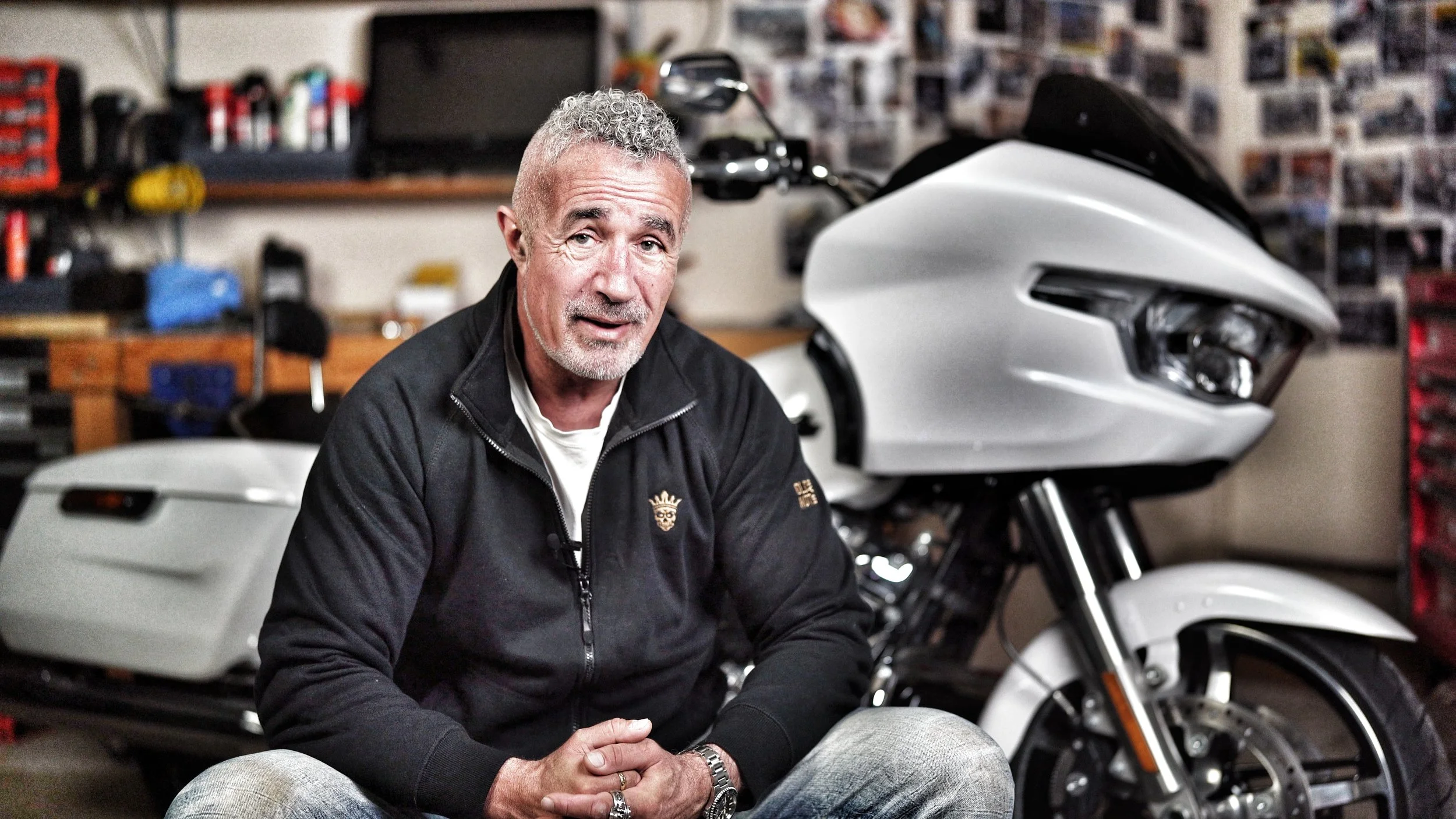
I have been riding motorcycles for over 40 years and Harleys for more than 30 of those. My own bike is a 2020 Street Glide Special with the 114 and an S&S 475 cam in it. So I came to this 2025 Road Glide with plenty of opinions already loaded.
This white pearl example of a Harley Davidson Road Glide turned up looking like a great white shark, and I spent enough time on it to confirm some of my biases, but also to change some of my preconceived ideas.
This is not a spec sheet read aloud. It’s what the Road Glide feels like from the saddle of a tall rider who already owns the obvious alternative, plus an honest conversation about what you will spend after you sign the paperwork.
The Fixed Fairing Changes How the Front End Feels
The biggest difference between a Road Glide and a Street Glide is not the engine or the paint. It is where the fairing is bolted. The batwing on my Street Glide is mounted to the fork, so every steering input swings a large lump of plastic through the air along with the wheel.
The Road Glide's shark nose fairing is frame-mounted, which means the fork and wheel do the steering and the fairing just sits there, cutting a hole in the wind.
Around town you notice it in car parks and any other place slow riding is required. To me the Road Glide feels like a boat, long and heavy. Certainly the Road Glide turns in easily with less weight at the bars than you expect for a bike this size. Sounds great but the batwing fairing is not exactly too heavy. I find it’s weight allows for a little more “feel”.
On the highway you notice it more. Sitting at 110 km/h into a crosswind, the Road Glide tracks straighter and asks less of your shoulders. That is the whole argument for a fixed fairing in one paragraph, and after a long day it can make a difference. Having said that, there is not enough difference to make “real world” difference. My advice based on the fairing alone would still be - buy the one you think looks best.
The 117 Engine Against My 114
The 2025 Harley Davidson Road Glide runs the Milwaukee-Eight 117, rated at 130 lb-ft of torque and 105 hp. My Street Glide carries the 114 with a cam, and I have always thought it was plenty for the road. The 117 is simply easier. It pulls from low in the rev range, it does not need to be wound out to overtake, and it holds a gear on a hill instead of hunting.
Reviews of the current shape put the Road Glide around 380 kg, so it is not a light motorcycle and it does actually feel heavy. It has a similar weight to the Street Glide but “feels” heavier in my opinion.
The weight disappears quickly once you are moving. The water-cooled cylinder heads and radiator are the other part of the story that matters in Australia. Sitting in summer traffic on an air-cooled big twin is a character-building experience. The Road Glide copes with it far better, and anyone who commutes in a capital city will feel that in their legs before they feel anything else.
Since we have touched on commuting, there is no problem getting between cars if you plan on using this bike close to town. There are however better alternatives for city traffic.
The Harley Davidson Road Glide Shark Nose Argument
People either love the fixed fairing or they think it looks like a kitchen appliance. The dual headlight arrangement is the usual flashpoint. Some riders want the twin lamps, some reckon a single light cleans up the front end, and Harley has moved the design around enough over the years that both camps can point at a model they like.
The comparison everyone makes is with Indian's fixed-fairing bagger, and it is a fair one. Indian went with a sharper, more modern front end. Harley Davidson was accused of copying the Indian design but I say that they just evolved a shape that’s been around since the original shark nose.
I do not think either is objectively better. What I will say is that the Road Glide has more road presence in a rear vision mirror than a Street Glide does, and in traffic that is worth something.
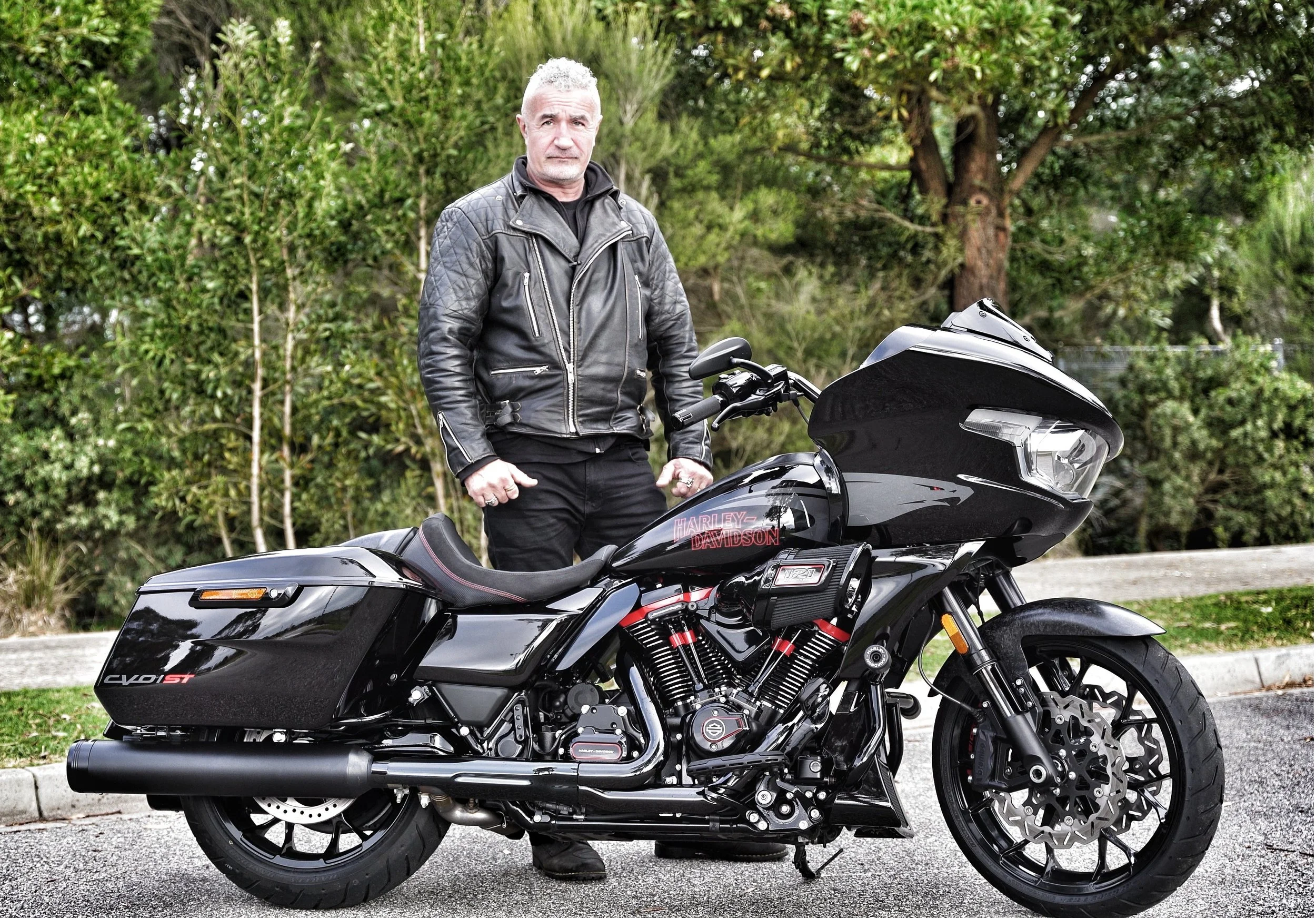
If the fixed-fairing thing has you curious about the top end of the range, the Road Glide CVO ST is the version to read about next. It takes the same shape and dials everything up.
Suspension and Brakes on Real Roads
The current Harley Davidson Road Glide got an extra inch of rear travel, and on the sort of patched, potholed back roads I ride, that inch earns its keep. It is still a firm motorcycle. But it settles after a bump instead of crashing through it, and on long days that adds up.
If you are coming from an older Harley you will love that Harley Davidson suspension is improving all the time. It’s acceptable now, in the past it never was.
The brakes are strong enough to haul it down from highway speed without drama, which is exactly what you want from a bagger with a pillion and luggage on board. I would like a touch more initial bite at the lever, but that is a personal preference and not a complaint about stopping power.
Rider Modes, Infotainment and Navigation
The current Road Glide runs Harley's Skyline OS infotainment on a large touchscreen, 12.3 inches on the latest models, with built-in navigation and the usual connectivity. I am old enough to have used a folded map in a tank bag, so I say this with some surprise: the screen is genuinely useful. The GPS got me through unfamiliar suburbs without a wrong turn, and the display is readable in Australian sunlight, which is not a small thing.
There are rider modes that change how the throttle responds, and the wet setting is the one I actually used. On a damp morning it softens the initial pickup just enough that you are not tiptoeing around roundabouts. The rest of the time I left it alone. The touchscreen also works with gloves, which sounds minor until you try to use a screen that does not.
Comfort for a Tall Rider
At 6'4" I am the awkward customer for any factory motorcycle. The Road Glide's seating position is roomier than my Street Glide's, and the frame-mounted fairing moves the dash further forward, so there is less of a wall in your chest. The seat is acceptable for a factory item and the floorboards give you room to shift around on a long leg.
It is still not perfect. The screen and controls are too far away compared to the Street Glide. The bars suit an average height rider better than a tall one, and the first thing I would change is the handlebar bend, followed by the seat. Personally if I had a Road Glide I would move to the T bar design that Thrashin Supply made popular and a similar set up appeared on the CVO Road Glide ST.
The wind protection is the standout. The fixed fairing pushes the air around you rather than at you, and there is noticeably less buffeting at highway speed than I get on the batwing. The one warning here is that tall riders will need a taller windscreen.

The Shorter Saddlebags and Everyday Practicality
The current bags are shorter than the old ones but also a little wider. Whether that matters depends entirely on what you carry. For a laptop, a change of clothes and a few tools, they are fine. For a full camping kit or a long two-up tour with a pillion who packs properly, you will need more than the two saddlebags anyway so size might not matter.
It really depends on what you need vs the look of the bike. Adding a tour pack or buying a Road Glide limited with the extra luggage capacity is a styling trade off. It is worth standing next to the bike with your actual gear before you commit, because bag capacity is one of those things nobody thinks about in the showroom and everybody thinks about on the second day of a trip.
Personally I like the stripped down version of all Harleys
Performance Baggers and King of the Baggers
Ten years ago a bagger was a tourer with luggage and a comfortable seat. The Harley Davidson Road Glide was considered the ugly duckling of the family. Now there is a whole performance category, and King of the Baggers racing in the United States is the reason. Watching these things race has changed what buyers expect from a big tourer, and Harley has leaned into it with the ST versions and the factory tuning support behind them.
That trend is why the Road Glide makes sense as a platform. The frame-mounted fairing is stable at speed, the chassis is stiffer than the old shape, and there is a whole aftermarket waiting to help you spend money. If you want to see how far that goes, the 131 Stage 4 Road Glide ST build is where you can push this from a dealer build and tune.

What the Dealer Doesn't Tell You About the Budget
Here is the part the brochure skips. A stock Harley Davidson Road Glide is a good motorcycle and a quiet one, but almost nobody leaves it stock. The near-compulsory list looks like this:
Exhaust, because the factory system does not sound like a Harley should.
A tuner, because the moment you change the exhaust you need to sort the fuel and the tune.
Air Cleaner - Required sometimes to allow more air when tuning. Later models have this done already but the factory air cleaner could always look better.
A cam, which is the single biggest seat-of-the-pants gain and the single biggest labour bill. This obviously gives you more torque and / or power but it also contributes significantly to the sound.
A seat, because the factory one will not suit everyone.
Handlebars, especially if you are tall or have short arms.
Foot controls, either to fit your leg length or to move your feet where you want them.
None of that is mandatory and it’s certainly not cheap. The above is the minimum I have done to every Harley I have ever owned. My advice is to budget for the first round before you buy, not after. Riders who plan for exhaust and a tune from day one end up with a bike they are happy with. Riders who buy the bike and then discover the cost of a cam job tend to be the ones complaining about it in the pub six months later. Prices and labour rates vary by dealer and state, so confirm the numbers with your local dealer rather than trusting anything you read online, this article included. I have found independent Harley mechanics also do a great job, check out some of my YouTube videos on this topic.
Road Glide vs Street Glide vs Road King
These three get cross-shopped constantly, and the difference is mostly about how much motorcycle you want wrapped around you.
| Bike | Fairing | Wind Protection | Luggage | Best Suited To |
|---|---|---|---|---|
| Road Glide | Frame-mounted shark nose | Highest of the three | Hard saddlebags, shorter than the previous generation | Long distance, highway commuting, riders who want less weight at the bars |
| Street Glide | Fork-mounted batwing | Good, more buffeting at speed | Hard saddlebags as above | Around town and shorter trips, riders who like the classic look |
| Road King | Quick-detach screen, no fixed fairing | Least, unless you fit a screen | Hard saddlebags as above | Riders who want a stripped-back tourer and less plastic |
The Road King is the interesting one in that group. Strip the fairing off and you get a simpler bike that is easier to work on and feels more like a traditional big twin. The Road Glide is the opposite approach: more bodywork, more wind protection, more tech. If you are leaning towards the batwing instead, the Street Glide article covers that side of the argument in detail, including why I still own one.
Frequently Asked Questions
Is the Road Glide better than the Street Glide for long trips?
Many riders say yes. The frame-mounted fairing delivers steadier wind protection and less weight at the bars over a long day. The difference is small around town and obvious after six hours on the highway. That said, plenty of riders cross the country on Street Glides quite happily, so it is a comfort margin rather than a dealbreaker.
Where does the Harley Davidson Road Glide sit on the Best Harley Davidson Ever, list?
Is a Road Glide too heavy for a newer rider?
The answer to this question depends on your confidence and experience. It is a big motorcycle, and reviews of the current shape put it around 380 kg. The weight disappears once you are moving, but car park manoeuvres and slow-speed turns demand respect. If you are new to touring bikes, spend time practising low-speed control on something smaller first, then move up.
Do you really need to spend money on modifications straight away?
No, but most owners do. The stock bike is quiet and comfortable, and the exhaust, tuner, cam, seat and bars are the usual first round. Budget for at least some of that before you buy rather than being surprised later. Ride it standard for a few months first so you know what you actually want changed.
What is the difference between a Road Glide and a Road King?
The Road King has no fixed fairing, just a detachable screen, so it feels raw and simple by comparison. The Road Glide has the frame-mounted sharknose, more wind protection, more electronics and a bigger dash. The Road King suits riders who want less bodywork and easier access for maintenance.
The Road Glide earns its reputation because the fixed fairing solves a real problem rather than just looking distinctive. Add the 117, the extra rear travel and the water-cooled heads, and it is a genuinely better highway motorcycle than the one sitting in my garage. I am not trading the Street Glide in tomorrow, because I like the batwing and I like the cam in it. But if I were buying new for long distance riding in Australian conditions, the great white shark might get the nod, and I would have at least the exhaust, the tuner and the seat budgeted before I walked into the dealership.